Masayoshi Takanaka Made Chicago Sing Without Words at Aragon Ballroom
There are shows where the crowd sings because they know the words. And then there are shows like Masayoshi Takanaka's in Chicago, where people start singing to the shape of a guitar line because that is the only logical thing left to do.
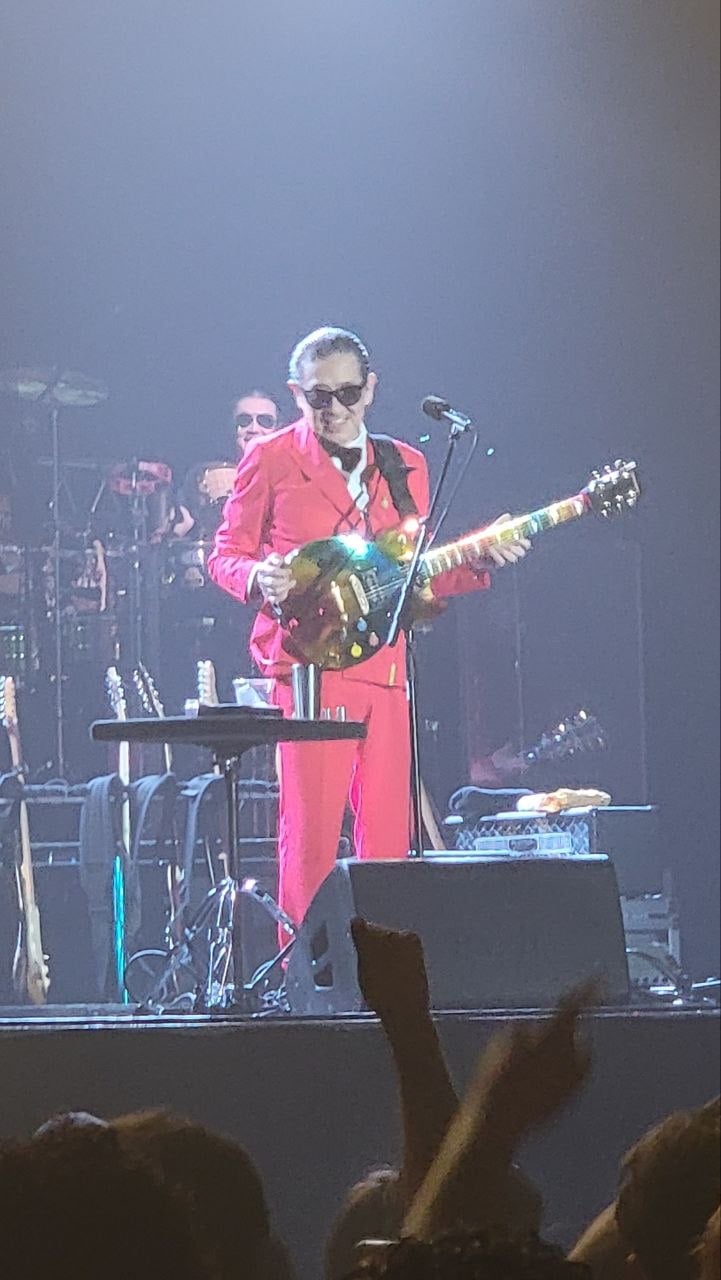
On April 7, Takanaka brought his SUPER TAKANAKA WORLD LIVE 2026 tour to a sold-out Aragon Ballroom, part of what official materials describe as his first-ever world tour. After more than five decades of playing, recording, and building one of the most colorful catalogs in Japanese fusion and city pop, he is not coasting on legacy - he is still turning rooms into motion. The Chicago stop was one of only a handful of U.S. dates on the run, which continues through the spring before a WORLD TOUR FINAL - Homecoming show in Tokyo on May 8 and a headlining slot at London's Palace Bowl Presents City Pop Waves festival in August.
Diaz's takeaway: this was not just a concert, it was a lesson in how to participate
One of the smartest things in Diaz's notes from the floor is that he did not treat the night like a normal guitar-hero review. What stood out to him was how participatory the whole performance became, even though so much of Takanaka's music is instrumental.
For Diaz, this felt like the first time much of the crowd had ever seen a real city pop band perform live - let alone a mostly instrumental one. And yet the room never looked confused. It looked guided. By the end of the night, Takanaka and his band had turned cheers, fist pumps, hand waves, wordless vocals, and shouted melodic responses into their own kind of crowd language. It was less "stand there and admire the musicianship" and more "come with us, here is your part."
Takanaka was the main event, and he played like he knew it
Diaz's notes on Takanaka himself are ecstatic for a reason. He called him a "solo master" and wrote about the wildness of watching an entire crowd sing along not to lyrics, but to the "whales" of a guitar. That image gets at what made the show work: Takanaka did not just play riffs, he tossed them out like invitations. Riff, fist pump, crowd reaction, another riff, another fist pump, then a full solo - over and over, with no dead air and no dull stretch in sight.
That showmanship tracks with the reputation he has carried for decades. Takanaka made his solo debut with Seychelles in 1976, followed it with a run of foundational records like Blue Lagoon and The Rainbow Goblins, and built a career on technical brilliance, bright melodic writing, and a stage aesthetic as colorful as the music itself. The current tour even revives his famous surfboard guitar, which was officially restored for the 2026 run after years offstage.
But Diaz's most useful observation is how specific each guitar felt. He clocked how Takanaka used different instruments for different emotional jobs: a Strat-style voice for western, blues, and pop-leaning licks; an SG for higher-energy attack; and then the red Yamaha SG, which in Diaz's telling is where things tipped into another level entirely. That was the moment the guitar did not just sound good - it started singing.
The supporting cast made the whole thing move
Official tour materials list the 2026 band as Akira Okazawa on bass, Masahiro Miyazaki on drums, Nobu Saito on percussion, keyboardists Kaoru Inoue and Rina Takamoto, plus vocal group AMAZONS. Diaz's notes make it clear this was not a "backing band" in the passive sense. Everybody had a job, and everybody mattered.
Okazawa's bass, in Diaz's words, grounded all of Takanaka's high-end tones and kept the city pop and funk pulse alive all night. He compared him to the side dish that makes the whole plate make sense - roasted potatoes and corn on the cob next to the lobster and steak. Miyazaki and Saito, meanwhile, gave the show a rhythmic architecture that felt both dense and breathable. Diaz had never seen two drum kits on the same stage before, and what struck him most was how the two players filled the pocket without stepping on each other. Miyazaki's drum fills made the room dance; Saito added the final contour with shakers, tambourines, bongos, and effects, becoming what Diaz called the herbs and spices of the whole thing.
The two keyboardists got one of Diaz's best metaphors of the night. Watching them, he wrote, felt like seeing a lead and rhythm guitarist who happened to be working across synths, piano, and - yes - a keytar. Their job was not just harmonic support. They defined genre, era, and mood from song to song. Diaz called them the sauces, salsas, and dressings of the performance, giving each number its own flavor. That image makes sense if you have ever watched a band slide from silky city pop shimmer into jazz-fusion sparkle without breaking flow.
The AMAZONS turned a virtuoso set into a communal one
And then there were the AMAZONS. Diaz's notes on them are some of the most perceptive in the whole write-up because they get at something easy to miss: the singers were not just there to add background vocals, they were helping teach the room how to behave inside a Masayoshi Takanaka show.
Depending on the song, they would sing lyrics or use non-lexical vocal lines, but just as importantly they cued participation - hands up in the air, side-to-side sways during emotional moments, fist pumps when the set got hotter. Diaz described it as the Amazons neatly wrapping everyone's contributions into an elegant little bow and handing it back to the crowd in seamless fashion. He even compared their effect to a refreshing Roku Gin Negroni on the rocks: balanced, botanical, and a twist on something classic.
That kind of detail explains why the night felt bigger than a nostalgia play. Takanaka was not just revisiting a cult catalog for collectors. He was showing how this music still lives in a room, how it still moves bodies, and how it can become communal even when it is largely instrumental.
What Takanaka is doing now
Chicago was part of a much bigger late-career surge. Live Nation's 2025 tour announcement framed SUPER TAKANAKA WORLD LIVE 2026 as Takanaka's first-ever world tour, following sold-out Los Angeles performances in 2025 that marked his first U.S. shows in decades. Official updates now position the run's May 8 Tokyo concert as the "grand finale" of the world tour, while the August 7 Palace Bowl Presents City Pop Waves festival in London will put him at the center of the first large-scale outdoor Japanese music festival in the UK. The overseas leg has also been tied to special venue-only merch, including a limited Aloha shirt and advance sales of a live analog LP from last year's Wiltern concert.
The Music Coast takeaway
Diaz closed his notes with a line that pretty much says it all: "30 out of 10 would watch again."
That kind of rating only makes sense after a show that stops feeling measurable. And honestly, that is what Masayoshi Takanaka did in Chicago. He did not just put on a technically stunning performance. He built an environment where a mostly instrumental city pop set could feel as participatory and emotionally immediate as a punk show, a funk revue, or a pop singalong.
At Aragon Ballroom, the guitar did not replace the voice. It became the voice. And Chicago answered back.